

It’s a hot summer day on the Mornington Peninsula, and your air conditioner has suddenly stopped working. As the heat builds, you’re left with a tough choice: try to fix it yourself or hire a professional. It’s a common question for many homeowners — is it cheaper and easier to go the DIY route, or is it better to rely on experienced technicians?
In this guide, we’ll take a close look at the true costs of heating and cooling services compared to DIY solutions. We’ll consider not just the upfront price, but also factors like safety, time, long-term performance, and quality. By the end, you’ll have a clear idea of when it’s worth doing it yourself and when it’s smarter to call in the experts.
Understanding Heating & Cooling Services vs DIY
First up, let’s be clear on terms. Heating & cooling services means professional HVAC work: installation of split systems or ducted units, routine servicing, major repairs, and safety checks, all done by qualified technicians. DIY means you doing it yourself at home – maybe swapping filters, doing minor repairs or even trying a full install with YouTube help.
There are easy tasks and there are really hard tasks. Swapping a dirty air filter? Totally a DIY win (and saves you a few dollars). Cutting holes in walls, recharging refrigerant, or rewiring a gas heater? Probably not a DIY winner.
The trick is weighing cost vs benefit. Yes, a service call costs money – roughly $600–$800 just for labour on a new split-system, according to CHOICE. But DIY often has hidden costs. Mess up an install and you could end up paying even more to fix it (or worse, cause damage).
In fact, home insurance can be voided if an unlicensed DIY job causes a fire or flood. Even the Australian Government warns that only licensed Heating & cooling services technician should install or repair major HVAC equipment – anything else risks safety, compliance issues and even fines. In short: DIY can feel cheap up front, but sometimes it’s false economy.
Cost Comparison: DIY vs Professional Heating & Cooling Services
The first thing on everyone’s mind is cost. How do the numbers stack up?
Upfront equipment costs:
If you DIY, you’ll still need to buy the unit and all the parts. A quality split-system air conditioner in Australia can run from about $600 for a basic model up to $5,500 for a top-of-the-line system. Professionals often have access to trade pricing or package deals, but the unit price is roughly the same.
Installation fees: Now the big one – labour. A licensed installer typically charges $600–$800 or more just to install a single split-system. If you DIY, you “save” that fee… until you consider other costs:
Tools & materials: Specialized tools (vacuum pump, gauges, drills, brackets) can cost hundreds.
Mistakes: Wrong sizing, refrigerant leaks, or bad electrical connections can ruin a unit. If the install goes pear-shaped, you might end up paying the full service fee anyway to fix the mess (and possibly replace parts).
Warranty risks: As CHOICE warns, installing without a licensed tech often voids the warranty. That means if your DIY install damages the unit later, you can’t claim repairs under warranty.
Running costs: A botched install can reduce efficiency. For example, if the outdoor unit isn’t leveled or the refrigerant is mischarged, your AC may run less efficiently, hiking your power bills.
Long-term savings:
On the other hand, a properly installed, high-efficiency system can save money over time. CHOICE notes that while installation is pricey, modern reverse-cycle systems are very energy-efficient – up to 300–600% efficient in Australian climates. That means one unit of power can produce 3–6 units of heating/cooling, drastically cutting running costs. In a climate like Mornington’s, cooling and heating consumes a large share of your power bill, so efficiency matters. A pro installer will size and set up the system to maximise efficiency, whereas DIY errors can burn extra dollars.
Example table:
Below is a snapshot of how the costs and benefits compare:
| Factor | DIY | Professional |
|---|---|---|
| Upfront Cost | Save on labour (~$600+), but pay for tools, possible rework. Unit price same as retail. | Pay trade/labour fees ($600–$800+), but get expertise and maybe trade pricing. |
| Quality & Efficiency | High risk of mistakes (poor airflow, leaks). Efficiency may suffer. | Optimal setup (correct sizing, refrigerant charge), maximising performance. |
| Safety & Warranty | Safety hazards (electrocution, gas leaks). Warranty often void if not installed by licensed tech. | Licensed installers follow safety standards. Warranty and insurance valid. |
| Time & Effort | DIY tasks can take days if you’re learning on the job (and stress you out). | Technician gets it done in a few hours, hassle-free. |
| Long-Term Costs | Potentially higher bills from inefficiency; risk of breakdowns. | Lower running costs from efficiency; maintenance plan and guarantees. |
From a pure dollar viewpoint, DIY might look cheaper on the invoice – you don’t hand over that $600 service fee. But you do hand over a lot of time and risk. Sometimes “saving” that $600 can cost you double if you need to call a pro later to fix DIY damage.
Safety and Compliance: Why Some Jobs Aren’t DIY
When it comes to safety, the verdict is clear: some heating and cooling jobs are dangerous without proper training. Air conditioners involve electrical wiring, pressurized refrigerants, and sometimes gas lines or water drains. A small slip can cause fires, electrocution, or refrigerant leaks (which can be both a health risk and an environmental hazard).
Even beyond the obvious accident risks, there’s the law. In Australia, only licensed technicians can legally install or do major work on air conditioners and gas heaters. Cutting corners can result in massive fines. As Queensland’s Electrical Safety Office bluntly warns, unlicensed electrical work (like DIY HVAC wiring) carries penalties up to $40,000 (and even jail time if someone’s injured). And if an unsafe DIY install causes a fire, your home insurer may refuse to cover the damage.
The Australian Government’s energy website is explicit: major HVAC jobs should be done by professionals. In fact, energy.gov.au reminds homeowners to “talk to an ARCtick licensed technician” for installing or servicing air conditioners. (ARC stands for the Australian Refrigeration Council – think of it like a stamp of professional approval.) Put simply, you can’t just plug in any split-system on your own and be sure it’s safe and legal.
Heck, one HVAC blog puts it bluntly: “It’s not worth it – you could end up paying more for repairs and even risk injury”. Another way to say it: DIY on HVAC is a bit like juggling with machetes – the savings aren’t worth losing a limb over.
Tasks You Can DIY (Safely)
Some maintenance tasks are totally in the “yes, you can do this yourself” pile, and they do save a few bucks:
- Filter Cleaning/Replacement: Check your AC filters every 3–6 months. Cleaning or swapping a filter is easy, and it keeps the system breathing freely.
- Outdoor Unit Check: Gently clear leaves/debris around the outdoor unit so airflow isn’t blocked.
- Thermostat Settings: Adjust the thermostat or timers to optimise comfort and efficiency.
- Basic Inspection: Visually inspect for obvious issues (like water leaks or strange noises) so you can report them if you end up calling a pro.
These simple DIY chores cost next to nothing (maybe the price of a new filter) and help your system run smoothly. In fact, CHOICE notes that portable air conditioners – the plug-in kind with an exhaust hose through the window – are quite DIY-friendly. You just slot in the kit and plug it in.
However, remember that portable units often have one downside: they’re usually much less energy-efficient and more expensive to run than built-in systems. So, a DIY portable might save installation fees, but it can blow out your power bills later.
When to Call a Professional
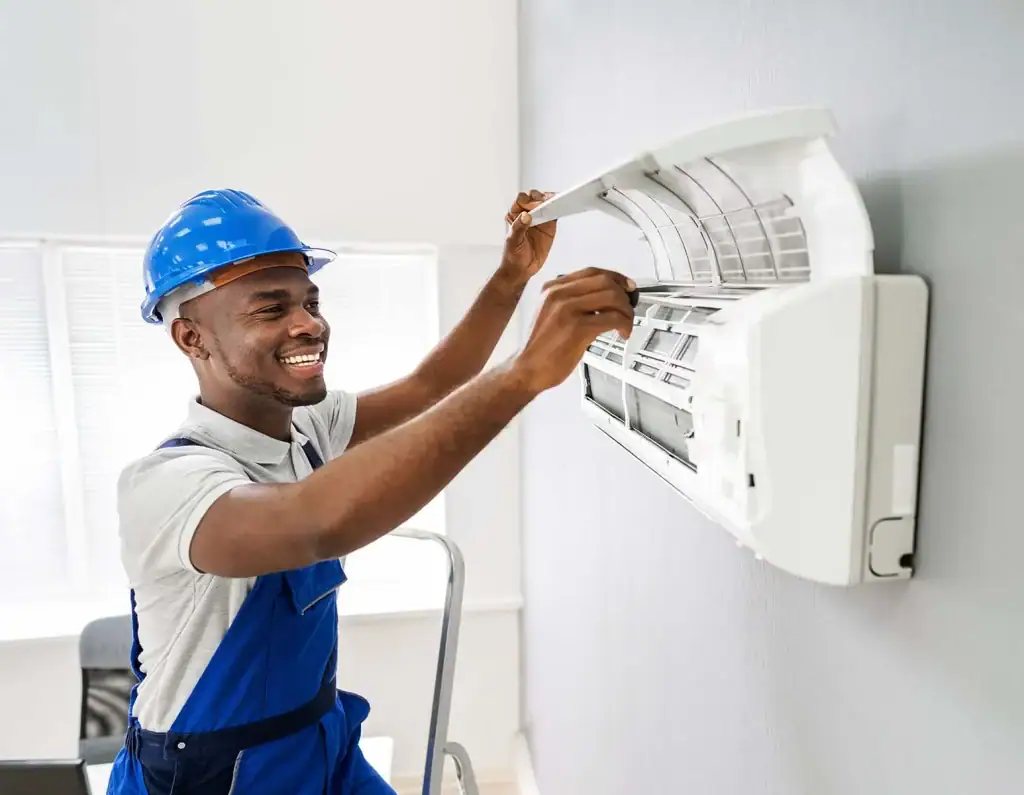
On the flip side, these tasks should absolutely be left to the pros:
- New Installations or Replacements: Whether it’s a split-system, ducted aircon, or a wall furnace, a pro ensures the unit suits your home size, is mounted correctly, and wired properly.
- Refrigerant Handling: Adding or leaking refrigerant is not something you can legally do without a license. (Those chemicals must be handled with care.)
- Electrical Work: Any wiring changes, new circuits or connections for the HVAC system need a licensed electrician. Remember, electricians carry insurance and follow strict codes – DIY electrical work does not.
- Gas Heaters and Flues: Installing a gas heater or repairing gas lines is highly regulated. One small leak could be deadly. Only a licensed gasfitter should touch this.
- Complex Repairs: If your unit needs a new compressor, a faulty PCB board, or major mechanical work, call the trained technician.
Professionals not only have the tools and know-how, but they also have the back-up. Licensed technicians usually provide warranties on their work (fix it again if it fails soon) and they ensure all safety standards are met. In fact, CHOICE’s heating/cooling expert Chris Barnes emphasizes that installers should ask detailed questions about your home’s insulation, power supply and layout before quoting. Those on-the-ground checks prevent unexpected costs (like having to rewire your house or reinforce a concrete pad) – stuff you’d likely miss on your own.
Quality, Performance and Long-Term Value
The cheapest option now might not be the cheapest option long-term. A big factor is quality of work. If your DIY install leaves even small errors, the system’s performance can suffer. For example:
- Improper Sizing: A system that’s too big or too small for the space won’t heat/cool efficiently.
- Poor Airflow: A blocked or badly hung indoor unit won’t distribute air evenly, creating hot/cold spots.
- Leaks & Corrosion: Refrigerant or water leaks (from bad seals or drain pipes) can corrode parts or flood your home.
These mistakes can shorten the lifespan of the system and drive up energy use. Conversely, a pro installer will do a precise heat-load calculation for your home, place units for best airflow, and seal everything up tight. CHOICE points out that, over time, a well-installed reverse-cycle system pays for itself by cutting power bills. New models can be “much more energy efficient than older units”, saving hundreds on your energy bills. If your DIY hackery means the AC runs 10% less efficiently, that’s 10% more on your bill – year after year.
Plus, consider home value and peace of mind. A buyer or insurance assessor will sleep better knowing your heating/cooling was installed by licensed professionals. A nicely maintained, warrantied system can be a selling point. If you plan to sell your Mornington home someday, a documented service history (from skilled HVAC folks) can boost buyer confidence (and perhaps the price).
Time, Convenience and Hidden Costs
Let’s talk time. You might save labor fees by DIY, but you pay in hours of your life. Researching how to mount the bracket, learning to vacuum-recharge refrigerant, doing extra trips to the hardware store… before you know it, a weekend project stretches into weeks. Meanwhile, you might still be sweating or shivering through peak season. Pro installers, by contrast, usually finish a standard split-system in a few hours. CHOICE’s expert tip: don’t wait until the last minute – HVAC techs get booked out in summer, which can leave you sweating and paying a premium.
And then there’s stress. DIY can lead to the “one more thing” syndrome: you fix this, find another problem, fix that… it’s a rabbit hole. Each surprise can cost extra parts or time. In a professional call-out, you pay a flat fee (often including some follow-up), and it’s done.
Hidden costs also pop up if DIY goes wrong:
- Curtailment Fees: If an electrician finds your work sub-standard, they may charge more to re-do it.
- Insurance Premiums: Home insurance can spike or reject claims after DIY accidents.
- Health Bills: Remember, refrigerants can cause frostbite or suffocation, and shocks can land you in hospital (with a tab).
These are all long-term “costs” you might not think of at the start. As a rule of thumb, if a job requires you to be up a ladder, handling heavy equipment, cutting walls, or dealing with gas/electricity inside them, seriously consider dialing the pros.
Conclusion
At the end of the day, deciding between heating & cooling services and DIY comes down to weighing immediate savings against long-term value. Sure, you’ll save on labor by doing it yourself, but DIY isn’t risk-free. Skipping professional help can lead to safety hazards, voided warranties, inefficiency, and higher costs down the track. For many tasks – especially installations and major repairs – the pros are usually worth the price. They bring expertise, guarantees, and peace of mind.
That’s not to say you can’t be involved: do your homework, get multiple quotes, and stay engaged in the process. For smaller chores, of course roll up your sleeves. But when it comes to cutting into walls, handling refrigerants, or wiring up your home’s heating/cooling system, it’s often smarter (and ultimately more cost-effective) to call a certified technician. After all, some repairs should stay cool and calculated – not sweaty, second-guessed DIY.
Ready to make the best call for your comfort (and budget)? Whether you need a quick tune-up or a full HVAC install, consult licensed heating & cooling experts to get the job done right. You might spend a bit more today, but you’ll save time, stress and money in the long run.
FAQs
Is it illegal to install or repair an air conditioner myself in Australia?
Yes – in most cases, it’s illegal to install or repair air conditioning systems yourself unless you are a licensed technician. Major HVAC work involves electrical wiring and refrigerants, which are regulated under Australian law. Doing it yourself can lead to fines, voided warranties, and serious safety risks.
What heating and cooling tasks are safe to DIY?
You can safely handle minor maintenance tasks like cleaning or replacing air filters, clearing debris around outdoor units, adjusting thermostat settings, and checking for unusual noises or leaks. Anything involving electricity, gas, or refrigerants should always be left to licensed professionals.
How much does a professional heating and cooling service cost?
On average, professional installation of a split-system unit costs between $600 to $800 in labour alone. Repair or maintenance services may vary depending on the job’s complexity. While DIY may save on upfront costs, poor installation can lead to higher power bills and costly future repairs.
Will a professional installation make my system last longer?
Yes. Professional technicians ensure proper installation, sizing, and refrigerant levels — all of which affect how efficiently and safely the system runs. This can prevent early breakdowns, maintain energy efficiency, and keep your warranty valid.
