
Picture this: it’s a scorcher on the Mornington Peninsula and your home feels like a sauna. You’re debating between installing a ducted evaporative cooling system or going with a traditional air conditioner. Both promise a cool escape, but they work very differently and suit different needs.
Let’s break it down in everyday language, comparing evaporative cooling installation to conventional air conditioning, Aussie-style. We’ll look at how they work, costs, climate fit, and ultimately which might be best for your seaside home.
What is Evaporative Cooling? Think of an evaporative cooler as Mother Nature’s air conditioner. It pulls in warm outdoor air through wet pads, letting water evaporate and cool the air before blowing it indoors. Imagine stepping out of a cool shower on a hot day – that refreshing blast is basically what an evaporative cooler does for your house.
According to CHOICE, evaporative coolers “lower the air temperature by turning water into cool vapour”. They’re simple, energy-efficient (only a fan and pump run), and add humidity to the air. Because of the humidity boost, you’ll want some windows or vents open to let warm air escape – otherwise it can feel stuffy.
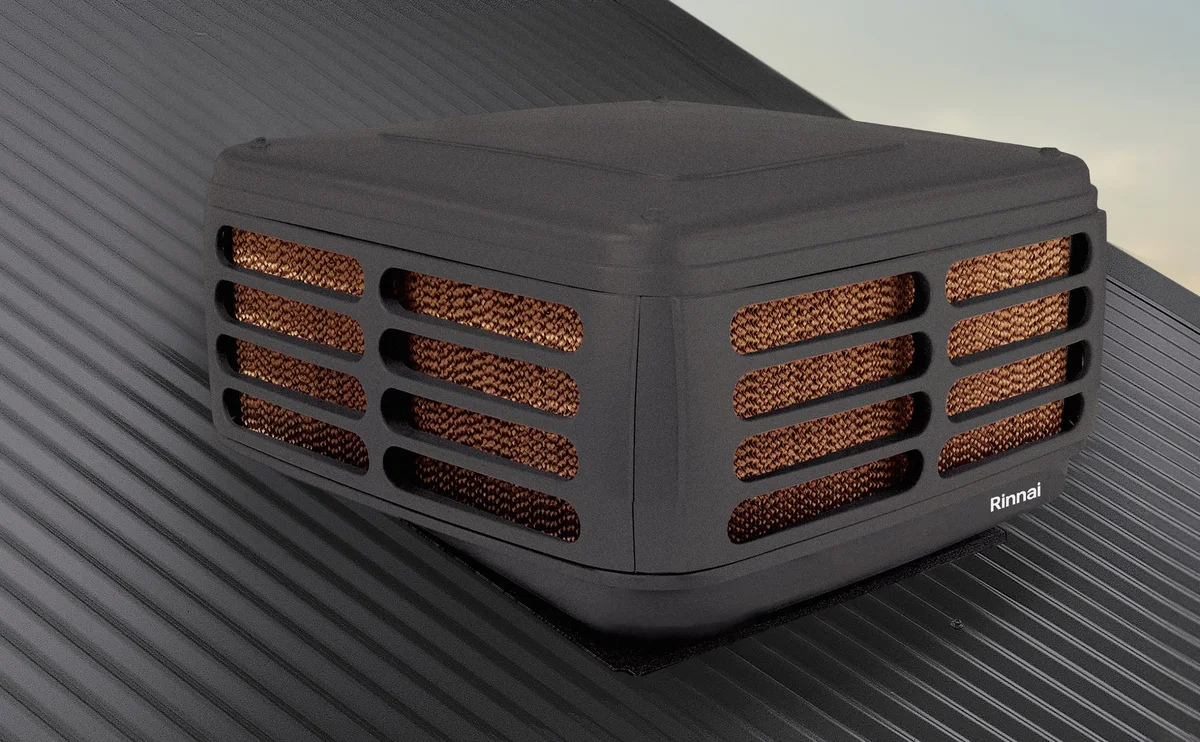
Evaporative Cooling Installation: These systems are usually roof-mounted ducted units. During installation, a licensed technician (ARC-qualified in Australia) places the main unit on the roof and connects a network of ducts to vents in each room. You’ll need a reliable water supply to the unit, and your installer will plan for how to drain excess water.
CHOICE points out that installation labour is intensive: a $2,500 cooler can cost ~$5,000 all up once the ducts and vents are fitted. So, budget for roughly double the unit price. Maintenance is pretty easy: every few years you replace the wet pads and clean the pump.
Pros: low running costs, no chemical refrigerant (just water), and simple tech.
Cons: uses water, requires ventilation (open windows), and only works well when outside air is dry.
How Air Conditioning Works
Air conditioners use a completely different trick – they’re basically fridges for your home. A split-system AC (the most common type in Oz) has a compressor unit outside and an indoor unit that blows cool air. It takes warm indoor air, runs it over coils filled with refrigerant, dumps the heat outdoors, and then pushes chilled air back inside.
ACs lower the indoor air temperature directly and also remove moisture, so the air feels drier. Reverse-cycle models even heat by running the process backward. Key types include portable, wall/window units, and ducted systems (which also install on the roof with ducts). Prices vary a lot: a small split unit can start at ~$600, while a large or ducted system might be $2,000–$5,000 or more.
Installation must be done by an ARC-licensed technician because of the refrigerant handling. Pros: very powerful cooling and dehumidifying, works well in any climate (even humid), can double as heating. Cons: higher electricity use, more expensive refrigerant hardware, and typically higher running costs.
Cooling Performance & Comfort
In a dry, hot spell (think 35 °C with low humidity), an evaporative cooler is fantastic. It’ll blow out a broad breeze of moist, chilled air across the house, and you’ll feel wonderfully refreshed for just the cost of running a fan. However, on a humid day (say a muggy 30 °C, 80% RH), an evaporative cooler has a harder time.
It’s like trying to sweat in a wet sauna – since the air is already heavy with moisture, you get less extra cooling, and the humidity indoors rises. In practice, in our peninsula climate (coastal humidity can be ~70–80% in summer), you’ll only see good evap cooling in the driest spells.
Air conditioners don’t have this limitation. They’re much more powerful at converting electricity into cooling. An AC can hit a thermostat-set temperature reliably, and keeps pulling humidity out of the air.
So on a sticky summer evening, an air conditioner will feel like walking into an icy room, whereas an evaporative cooler might feel like standing in a swampy tent. Put simply: evap = gentle, breezy cooling, AC = sharp, strong cooling.
Cost & Energy Use Comparison
| Feature | Evaporative Cooler | Air Conditioner |
|---|---|---|
| Installation cost | Unit ~$2,500–$3,500; total installed ~ $5,000 | Split-system ~$750–$1,500; ducted ~$1,800–$2,500 (plus install) |
| Energy use (cooling) | Low: ~0.3–0.7 kW/hour (just fan & pump) | Higher: ~1.5–4.0 kW/hour (compressor + fan) |
| Water use | ~15–25 L per hour (for big whole-house units) | None (only electricity) |
| Annual running cost | ~$200–$300 (in dry use-case) | ~$400–$600 (typical household use) |
| Best climate | Hot and dry | Any climate – especially effective in humidity |
| Cooling character | Large airflow, adds humidity | Powerful, dehumidifies air |
| Lifespan/Maintenance | ~15–20 years; replace pads every 2–3 years | ~10–15 years; filters cleaned/replaced every 3–6 months |
| Environmental impact | No refrigerants, low electricity use (uses water) | Uses refrigerant gases, higher power draw |
What this means: An evaporative cooler costs more upfront (for whole-house coverage) but uses very little electricity, whereas a split AC is cheaper to buy but sips more power. For example, an evap system might only cost ~$200–$300/year to run, while an AC system of similar capacity can be $400–$600/year.
Climate Fit for Mornington Peninsula
Here’s the kicker for our neck of the woods: Mornington Peninsula summers aren’t desert-dry. We’re coastal, so humidity runs fairly high. Evaporative coolers aren’t recommended for humid or wet climates. In other words, if the air outside is already moist, the cooler won’t help much.
In practice, if Peninsula days are in the high-20s with 70–80% humidity, an AC will feel much crisper. An evap cooler will perform best on those drier summer days in late spring/early summer.
On the plus side, our relatively mild climate means you might not blast your system all summer. If you live near the coast with breezy evenings, a good fan and open windows might even suffice much of the time, saving energy.
But on dead-calm hot days, air conditioning gives you that reliable cooling. For Mornington Peninsula, that suggests: if you go evaporative, pick it for the rooms you ventilate well (and maybe pair it with a reverse-cycle AC for damp days).
Environmental and Smart-Tech Notes
Evaporative systems are eco-friendly in a straightforward way: they use only water and electricity (no greenhouse refrigerants) and often save up to ~80% energy compared to AC when conditions are ideal. The trade-off is they consume water – think dozens of litres per hour – which can add up. If you’re on tank water or have limits, factor that in.
Air conditioners use more electricity and a chemical refrigerant gas (though modern units use lower-GWP refrigerants). Many AC units have a 3-5 star energy rating and smart modes nowadays, but they still draw more amps. On the upside, ACs typically cool faster and can be more precise (and double as heaters in winter).
Good news for tech-savvy readers: modern units of both types offer smart controls. You can find evaporative coolers and ACs with Wi-Fi and app connectivity, automated climate sensing, and energy monitoring.
Installation & Maintenance Tips
- Professional installation: Both evaporative cooling and air conditioning should be installed by qualified technicians. In Australia, installers need proper licensing to handle refrigerant or work on ducts. It’s not a DIY weekend project – you’ll want a pro to run piping, wiring, and ensure everything is sealed.
- Ventilation: Evaporative coolers must have some open window or vent at all times, to avoid indoor condensation build-up. Air conditioners operate with doors/windows closed.
- Maintenance: For an evaporative system, plan to replace the cooling pads every 2–3 years and clean the water pump each season. For a refrigerated AC, clean or replace the filter every few months and schedule a service every couple of years. Doing this will keep your cooling efficient and your air clean.
- Running tips (for AC): If you go with air conditioning, simple habits save big bucks. Keep your thermostat no more than 8 °C cooler than outside, use “Eco” or economy mode when you can, and only cool occupied rooms. Also, place the outdoor unit in the shade if possible – a hot compressor working in the sun wastes energy.
Making the Decision on the Peninsula
In the end, it depends on your priorities and your home. Here are some factors to consider:
- Local Climate: Mornington’s humid summers mean air conditioning often gives steadier relief. But if you mostly want to cut power bills and can handle some humidity, an evaporative system can shine on dry days.
- Household Needs: If you need year-round comfort (cooling plus heating) or have young kids/sensitive adults, a reverse-cycle AC might be safer. For bedroom or home-office cooling where you can crack a window, an evaporative cooler might suffice.
- Budget and Bills: Evaporative units cost more upfront for whole-house cooling, but typically use less power. Air conditioners are cheaper to buy for one room but can spike electricity use. Do the math: an evap cooler might halve your cooling energy use, but it adds water bills.
- Environment: If you’re keen on eco-friendliness, evaporative cooling has no refrigerants and uses less power in dry weather. If water is scarce or you live inland (not an issue for Mornington), an AC might be more practical.
- House Layout: A well-insulated, sealed home with few drafts is ideal for AC. A more open, airy home with lots of windows is ideal for evaporative cooling.
Some homes even use both: evaporative cooling for the hottest dry days and AC as backup on muggy nights.
Conclusion
Evaporative cooling and air conditioning each have their champions. If you love the idea of eco-friendly, breezy comfort and typically dry heat, evaporative cooling installation could be a brilliant way to slash your power use. But if you crave crisp, controllable cooling (and heating in winter) regardless of humidity, a modern AC is hard to beat.
There’s no one-size-fits-all answer – the best choice is the one that matches your climate, home, and lifestyle. Now that you’re armed with the facts and some Aussie common sense, you can make the call (or better yet, chat to a local HVAC pro for a quote). Stay cool out there!
Frequently Asked Questions
Is evaporative cooling cheaper to run than traditional air conditioning?
Yes, evaporative cooling generally costs less to run because it uses only a fan and water pump, consuming far less electricity than refrigerated air conditioning.
Can evaporative cooling work effectively in humid weather?
Evaporative systems work best in dry climates. In high humidity, their cooling efficiency drops, so on particularly muggy days, they may not feel as effective as air conditioning.
How long does it take to install evaporative cooling in a home?
Most installations take between one to two days, depending on the size of your home and the complexity of the ductwork.
What’s better for year-round comfort: evaporative cooling or reverse cycle air conditioning?
If you only need summer cooling, evaporative systems are economical and eco-friendly. But for both heating and cooling, reverse cycle air conditioning offers more flexibility.
