

Have you ever opened your electricity bill and wondered why your Reverse Cycle AC bill is suddenly so high—especially during peak summer or a cold winter spell? If you live on the Mornington Peninsula and rely on a reverse-cycle air conditioner, you’re not imagining things.
These units, while efficient, can still drive up costs if used in certain ways or if your home isn’t optimised for energy use. Understanding what’s behind those rising numbers can help you make smarter decisions about how you heat and cool your space.
In this article, we’ll explore the most common reasons reverse cycle air conditioning can lead to high electricity bills, and what you can do to reduce them—without sacrificing comfort.
7 Reasons Your Reverse Cycle AC Bill Is Sky High
Let’s cut to the chase – here are the seven sneaky culprits that might be inflating your energy bill in Mornington Peninsula:
1. Unrealistic Temperature Settings
Setting the temperature too low in summer or too high in winter makes your system work overtime. Each degree of difference from the outside temperature can increase your power usage by 5–10%. Aim for 24–25°C in summer and 20–22°C in winter. Your body will adjust quicker than your bill will.
2. Running It for Too Long
Leaving the aircon on while you’re out or overnight can silently double your bill. If you run your AC for 8 hours a day, that’s over 240 hours a month. Multiply that by the per-hour rate, and it’s clear how quickly the numbers grow. Use smart timers and programmable thermostats to avoid unnecessary runtime.
3. Poor Home Insulation
Without proper insulation, your AC is in a losing battle. According to Sustainability Victoria, up to 25–35% of your heating and cooling energy can be lost through the ceiling and 15–25% through windows and walls. Draught-proofing and adding insulation can cut your usage dramatically.
4. Old or Poorly Maintained Units
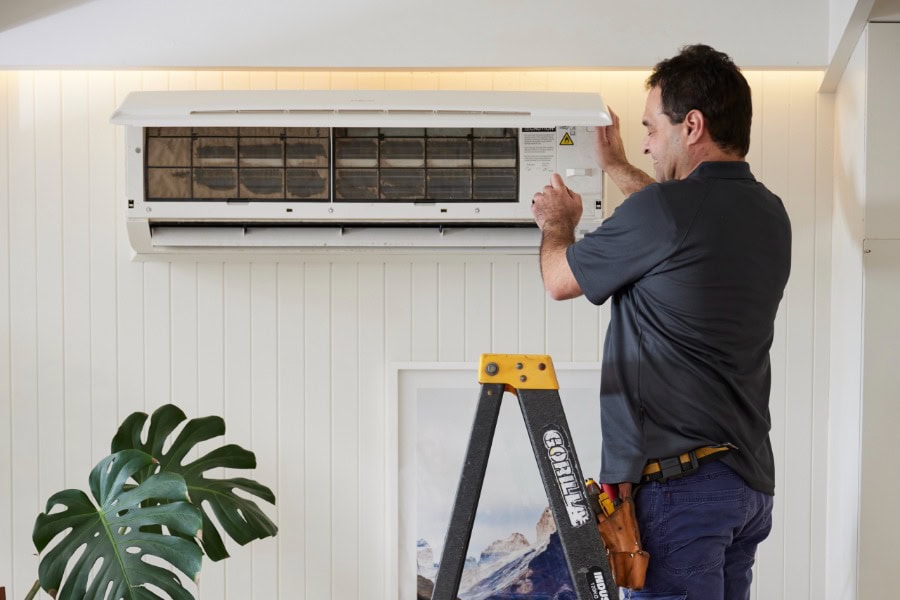
If your unit is over 10 years old or rarely serviced, it might be chewing through power like a tradie at a Bunnings sausage sizzle. Dirty filters alone can reduce efficiency by up to 15%. A yearly service and monthly filter clean can make your system run like new.
5. Using It in All Rooms All the Time
Heating or cooling unused rooms is a classic energy waster. Close doors and vents in unoccupied spaces. According to Energy.gov.au, zoning your usage can reduce power consumption by up to 30%. One room at a time, folks.
6. High Electricity Tariffs
Victoria has some of the highest energy costs in the country, currently averaging 38¢ per kilowatt-hour (kWh). That means even modest use can lead to significant bills. Shopping around for cheaper providers or off-peak plans can provide instant savings.
7. Not Using Eco or Energy-Saving Modes
Ignoring eco modes is like never using WiFi on your smartphone – you’re missing out on a major feature. These settings optimise airflow and power consumption, reducing usage by up to 20%. They’re built to help you save – let them do their job!
Summer Sizzle: When Chill Air Burns Cash
Reverse-cycle aircon on a wall in a Mornington living room. Even a small Aussie lounge heater is a big energy user – heating/cooling is roughly 40% of a typical home’s power bill. Run it full-tilt all day and those kWhs stack up. Here’s why your air conditioner might be guzzling energy in summer:
- Long hot afternoons: Even though Mornington’s average summer max is around 25–26°C, we Aussies aren’t built for much humidity. Running the AC for several hours every afternoon (or 24/7 if you’re working from home) sends energy use soaring. Remember, even a 2–3 kW unit blasting cool air for 5+ hours can cost a few dollars each day.
- Inefficient settings: Cranking the AC well below outdoor temperature creates a big temperature gap. The rule of thumb is to avoid setting your reverse-cycle more than ~8°C cooler than outside. Anything lower makes the system work harder – and use more electricity.
- Old or dirty equipment: Filters and coils clogged with dust force the unit to run longer. An unserviced AC is like wearing a jacket and blanket in summer: pointless, costly, and sweaty! Keep filters clean for peak efficiency.
In practical terms, running costs add up. A survey by CHOICE found a medium-sized reverse-cycle system (about 4–6 kW) can cost roughly $340–$650 per year to run in an average Australian climate. Even small tweaks help. Setting your thermostat just a few degrees higher (say 25°C instead of 22°C) can shave tens off your annual cost.
Winter Blues: Heating Your Home on a Budget
Let’s flip to winter. The Peninsula might not get snow, but nippy nights (around 7–8°C on average) can make our homes feel frosty. Many of us switch on the reverse-cycle in “heat” mode to crank the temperature up.
A reverse-cycle unit is actually quite efficient (moving 3–6 units of heat for every unit of electricity), but it still uses a lot of power if you run it constantly. Consider this: heating costs tend to spike because warm air escapes and cold air leaks in. If the heater is on all night or most of the day, that electricity adds up fast.
- Efficiency is high, but not magic: Yes, a heat-pump beats an old electric bar heater any day (300–600% efficient vs 100% for bar heaters). But even so, electricity isn’t free. Running the AC in heating mode for hours can still cost hundreds each winter. Remember the CHOICE numbers – a medium system might use $340–$650 annually if it’s on a lot.
- Poor insulation and draughts: Classic Peninsula homes (many built decades ago) often leak heat. Every gap or thin wall means your reverse cycle is essentially heating the great outdoors. This is like keeping a heater on in a tent – fun, but a very expensive tent.
- Over-enthusiastic thermostats: Turning the heat way up “just for half an hour” is tempting, but that hour at 25°C vs 20°C can add a noticeable chunk. Our friendly advice: set a comfortable but not tropical goal. A modest 21–22°C feels fine and is kinder on the wallet.
Real example: The Finder data show a typical United Energy household (Mornington Peninsula area) used about 1,387 kWh in winter vs 1,065 kWh in summer (per three-month season). At the standard Vic energy rate (~38¢/kWh), that extra ~322 kWh in winter costs about $120 more than a summer quarter. It’s no wonder bills jump when we’re using the heater heavily in winter.
For clarity, consider an average United Energy bill under the Victorian Default Offer (about 38¢/kWh). A typical household’s quarterly usage might look like this:
| Season | Usage (kWh) | Est. cost at 38¢/kWh |
|---|---|---|
| Summer (Nov–Jan) | 1,065 | ~$407 |
| Autumn (Feb–Apr) | 1,062 | ~$406 |
| Winter (May–Jul) | 1,387 | ~$532 |
| Spring (Aug–Oct) | 1,030 | ~$394 |
(Data from Finder/AEMO for Vic; costs are usage × 0.3830$.)
Rising Power Prices (Ouch!)
Beyond just how much you use, electricity prices in Victoria have been climbing. Wholesale prices went nuts in 2023, pushing average bills up ~25% last year. Even though default tariffs eased a bit for 2024, Victorian customers still pay around 38¢/kWh on a flat tariff (plus a daily fee of ~$1.30). That’s one of the highest rates in Australia – every extra kWh (from running the AC longer or colder settings) really stings the budget.
So yes, part of that high AC bill is out of your control: the market. But don’t despair – it also means wasting less power yields bigger savings.
Quick Tips to Chill Your Bills
Before we wrap up, here are bite-sized tips to lower that reverse-cycle cost:
Alternate heating: On milder winter days, try a fan (they cool you by evaporation) or a portable oil heater (which can be surprisingly efficient for a small space). Even old-school fixes—extra blankets or a hot water bottle—can shrink the load.
Set a sensible temp: Stick to about 24–25°C for cooling and ~21–22°C for heating. Each degree closer to the outside temp saves energy. Think “jumper weather” – maybe wear socks and a jumper instead of nuking the heater.
Use timers and modes: If your unit has an Eco or sleep mode, use it. Running the AC when you’re asleep or out of the house is wasted money. A timer can turn it off after you’re snug.
Zone it (if possible): Do you have multiple units or a ducted system? Only heat/cool the rooms you’re in. Closing doors and curtains at night keeps heat in the bedroom without wasting it on empty spaces.
Service regularly: Clean or replace filters twice a year. A well-maintained AC delivers the same comfort with less effort (and fewer kWh).
Harness the sun: On sunny days, draw the blinds in winter to let heat in, and close them in summer afternoons. Passive heating (or blocking heat) means your AC doesn’t have to work as hard.
Check for savings schemes:
- Peak vs off-peak: If you have off-peak/timer tariffs for hot water or heating, run your AC or heaters outside peak times when electricity is cheapest.
- Rebates: Victoria’s Energy Upgrades program offers up to $7,000 rebates for upgrading to efficient reverse-cycle systems. Yep, literally money back in your pocket for going greener. (Find out more on the Victorian Energy Upgrades website.)
Summary
High reverse cycle AC bills in Mornington Peninsula usually come down to a few key factors: extreme seasonal usage, poor insulation, inefficient habits, and rising electricity rates. Fortunately, small changes can make a noticeable difference. Setting your thermostat to recommended levels, using zoning strategies, cleaning filters regularly, and making use of energy-saving modes can all help reduce costs.
If your unit is outdated or your home isn’t well insulated, it might also be worth looking into upgrade options or available energy-efficiency rebates in Victoria. Staying informed and making a few smart adjustments can go a long way in managing your power bill more effectively.
FAQs About Reverse Cycle AC Bills
Does reverse cycle heating use a lot of electricity?
Yes and no. Reverse-cycle units are efficient (up to 600%!), but electricity in Victoria is expensive. If you run it constantly, costs will add up fast.
How much does a reverse cycle air conditioner cost to run per hour?
It depends on the size of the unit and settings. A 5kW unit might cost 35–60 cents/hour in Victoria. Use timers and sensible temps to cut that down.
How can I reduce my reverse cycle air conditioner bill?
Set temps wisely, only heat/cool occupied rooms, clean filters regularly, and use energy-saving modes. And if you’re upgrading – go for higher energy-star ratings.
Are there government rebates for efficient AC in Victoria?
Yes! The Victorian Energy Upgrades program offers up to $7,000 in rebates for efficient reverse-cycle installs and insulation improvements.
