
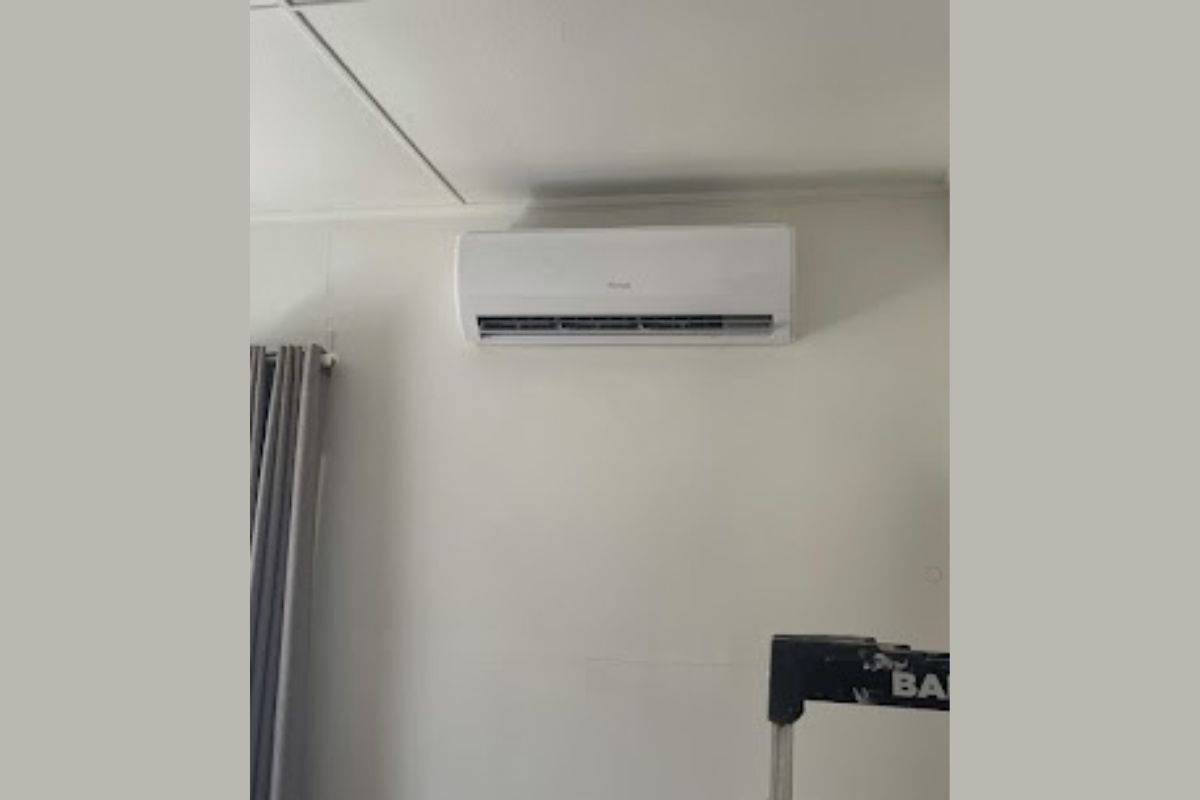
Imagine, a sweltering January afternoon on the Mornington Peninsula, and you step into your home craving a blast of cool air. That wall-mounted split-system AC in the living room hums to life, and suddenly you’re bathing in alpine-fresh comfort. From that moment, you might wonder, how much is this magic costing me?
In this article, we’ll dive deep into wall-mounted air conditioners – what they are, how they work, what they cost up front and to run, and how to get the most out of them without blowing your budget. Whether you’re daydreaming of beachfront bliss or a cozy winter evening, you’ll learn the ins and outs of making your AC efficient (and friendly to your wallet).
What is a Wall-Mounted AC?
Wall-mounted AC systems are essentially split-system reverse-cycle air conditioners that hang on your wall. Picture a sleek white box (the indoor unit) mounted high in a room; it blows cool (or warm) air inside. Outside, often on an exterior wall or the ground, sits the compressor/condenser unit (see image). Together they keep your place comfortable. The indoor unit has vents and a fan, while the outdoor unit works hard to push heat in or out.
These systems are popular in Aussie homes because they’re compact yet powerful. A small 2.5kW unit might cool a snug bedroom, while a 6–8kW unit can handle a large living area. Most modern wall ACs are inverter type, meaning they adjust their compressor speed to maintain temperature efficiently rather than constantly cycling on/off.
That translates to less wasted power and more even comfort. You probably control it with a remote or even via Wi-Fi, adjusting temperatures and fan speeds as you please. In sum: a wall AC is like a small heat pump on your wall – it can cool in summer and heat in winter, often in one neat package.
Installation & Pros
The cool part (pun intended) about wall-mounted AC is ease: you get to pick which rooms need cooling/heating, and installers simply mount the indoor unit, connect pipes to the outdoor box, and plug it into power.
For example, if you’re retrofitting an old home or adding cooling to a new build, a qualified gas ducted heating installation and repair expert can set it up for you. (Yes, those HVAC pros often handle ducted gas systems and split-system ACs – convenience!) A pro will calculate the right capacity (too small a unit struggles on hot days; too big wastes money and chills you with drafts).
They’ll also consider insulation, window shading, and room orientation. The upshot: once installed, a wall AC is relatively low-maintenance (keep filters clean, check refrigerant pressure once a year) and can last 10–15 years.
Cost – Buying & Installing
Cost – Buying & Installing: So, how much will this cost you? Think in two parts: the unit price and the installation fee. A basic wall-mounted AC (say ~3.5kW, mid-range energy rating) might retail around A$900–$1,500. Bigger or fancier models (high-star rated, smart features, multiple zones) can go up to $2,000+ each.
Installation by a qualified technician usually runs A$500–$1,000 more, depending on complexity. For a single-room system, that means a complete setup will often end up in the $1,500–$3,000 range. Larger homes needing multiple units or a multi-split system can reach $5,000+ total.
- Unit size: A small 2.5kW unit (ideal for a bedroom) might cost around $800–$1,200 (plus install). Mid-size 5–6kW living-area units often hit $1,200–$1,800 (plus install).
- Installation factors: Labour cost depends on wall material, how far indoor and outdoor units are from each other, and whether new electrical work is needed. Standard install is usually one afternoon; tricky spots (second-floor walls, hard-to-access wiring) can add to labour.
- Brand & features: Top brands and high star ratings cost more upfront but can yield savings later. For example, a 5-star unit might be $300–$500 pricier than a 3-star, but you could recoup that difference in electricity savings over a couple of years.
- DIY? Don’t. Handling refrigerant and ensuring a leak-free install requires certification. Always hire a licensed technician. They’ll also give you warranty on the install.
Power Use & Running Cost
Now for the burning question: What does it cost to run this thing? The answer depends on the unit’s input power, your electricity price (in Victoria, roughly 25–35 cents per kWh nowadays), and how many hours you run it. A rough formula is:
Power Use (kW) × Electricity Price ($/kWh) × Hours Used = Cost.
For a typical wall AC: say you have a 2.5kW cooling unit. In cooling mode at a mild summer night, it might draw about 0.7–0.8 kW (inverter machines draw less than their listed capacity once the room is cool). If electricity is 30c/kWh, running 4 hours would cost 0.75 kW × $0.30 × 4 = $0.90/day. Over a 30-day month (every evening), that’s around $27. A larger 6kW unit might draw ~1.7kW under similar conditions, costing ~$2.00 for 4 hours or ~$60 a month.
To make this clear, here’s a quick table of typical running costs (based on a 30c/kWh tariff and 4 hours of use per day):
| Unit Size (Cooling Capacity) | Approx. Power Draw | Est. 4hr Cost (Day) | Est. Monthly Cost (30 days) |
|---|---|---|---|
| 2.5 kW (small bedroom) | ~0.7 kW | ~$0.84 | ~$25 |
| 6 kW (medium living area) | ~1.7 kW | ~$2.04 | ~$61 |
| 8 kW (large open-plan) | ~2.3 kW | ~$2.76 | ~$82 |
| 10–12 kW (ducted whole-home) | ~3.0 kW | ~$3.60 | ~$108 |
(These are estimates for cooling in moderate Australian conditions at 30c/kWh. Heating mode often uses similar or slightly less power in moderate winter climates.)
In real terms, this means running a wall AC isn’t as scary as it sounds – you’re not paying dollars per hour like some imagine. For example, crunching the numbers: a 3.0 kW (10,000 BTU) bedroom AC on a 30c/kWh tariff costs only about 40 cents to run for one hour. Run it 8 hours at night and that’s about $3.20 per day, or $96 per month (for heating or cooling mode).
However, you can easily save on those bills: every degree cooler in winter or warmer in summer can change your cost. The tip from experts is to aim for a comfortable but not extreme setting (like 20–22°C heating or 24–26°C cooling) and use timers or economy modes.
Also, running the AC with some fans can allow you to set the AC a bit higher while still feeling cool (fans add a 3°C “wind chill” effect). Finally, keep the filters clean – dirty filters restrict airflow and force the unit to work harder (and draw more power).
Efficiency & Savings
One of the greatest strengths of reverse-cycle wall ACs is their efficiency. Unlike older electric space heaters (which are at best 100% efficient by converting 1 unit of electricity to 1 unit of heat), a reverse-cycle AC can move 3–5 times more heat energy than the electricity it uses.
In fact, the Australian Energy Department notes that modern units range from roughly 300% to 600% efficient (aka COP of 3–6) in heating mode. Think of it this way: every $1 of power in can feel like $3–$6 of heat out! This is why even the cheapest star-rated split-system ACs usually beat electric panel heaters in heating costs.
For cooling, efficiency is measured by the Energy Star rating and SEER (Seasonal Energy Efficiency Ratio). Higher star ratings mean better performance. The government-mandated Zoned Energy Rating labels (which you see on AC units in stores) show how many stars you get for cooling in different climates.
For Mornington Peninsula (a temperate climate zone), you’d look at the “average climate” star rating on the label. More stars = more savings. In practice, each extra star can save you roughly 10–15% on running costs. For example, a 5-star AC might use 20% less electricity than a 3-star model of the same size.
Besides picking a high-star unit, other savings tips include:
- Proper sizing: Don’t buy the biggest machine assuming “bigger is better.” An oversized AC cycles on and off more, wasting energy and causing temperature swings. Conversely, an undersized AC runs constantly but never reaches your set point. Getting the right kW for your room (often based on room area in m², insulation, sun exposure, etc.) maximizes efficiency.
- Home improvements: Sealing drafts, adding insulation, and installing blinds/curtains or external shading (like eaves or awnings) make a huge difference. If your house stays cooler naturally, the AC uses much less power. As government tips suggest, simple fixes like weatherstripping doors and windows or adding curtains can reduce load on your AC.
- Good habits: Run your AC only when needed. Turn it off or set it to a higher temperature when you leave home. Use ceiling or floor fans to circulate air (fans are cheap to run, only a few cents per hour). Periodically clean filters and ensure vents are not blocked by furniture or laundry.
- Smart controls: Many modern ACs have timers, sleep modes, or even smartphone apps. Use these to avoid cooling an empty house or overshooting your target when sleeping.
Putting it all together: Wall-mounted ACs give you flexibility room by room, often at lower cost than ducted systems. They cost less up front and waste very little energy, as long as you choose well and run them wisely.
Government Insight
It’s worth noting the broader picture: heating and cooling are big chunks of any Aussie home’s power bill. The federal energy.gov.au heating & cooling guide points out that 20–50% of household energy use can go to climate control, depending on your climate zone.
That’s huge – almost half your bills! So investing in an efficient wall AC (and good insulation) really counts. In fact, compared to running an electric bar heater, a reverse-cycle AC is far more economical in winter.
Conversely, in summer a wall AC cools much more efficiently than running windows wide open in humid heat. By choosing a high-efficiency model and using it smartly, you’ll notice the difference in both comfort and your wallet. (Pro tip: consider switching to night-rate power or adding solar panels – when your meter’s cheaper or you generate your own electricity, cooling the house can cost almost nothing in the long run.)
Conclusion
Wall-mounted AC systems are a versatile, generally cost-effective way to cool and heat individual rooms. The upfront cost (unit + install) is typically in the low thousands of dollars, but that’s offset by their efficiency.
In terms of power use, modern reverse-cycle units can pump out 3–5 times more heating/cooling energy than the electricity they draw, and even on a 25–30c/kWh tariff the hourly cost can be under $1 for many use-cases. The trick is efficiency: picking the right size, high star rating, and using good habits (sealing doors, clean filters, fans) to minimize run-time.
By following these tips, you’ll stay comfy without the post-AC-bill shock. Feeling ready to upgrade or install a wall-mounted AC? Chat with a pro installer for advice on the best unit for your space. With the right system, you can have a home that’s just as cool (or warm) as you want – without breaking the bank.
In short, wall-mounted ACs are a solid investment for reliable comfort. With smart use and regular servicing, you’ll stay cool (or warm) and keep the energy bills from melting your budget.
Frequently Asked Questions
What exactly is a wall-mounted (split-system) AC unit?
It’s essentially a two-part air conditioner: a sleek indoor unit you mount high on a wall, connected by piping to an outdoor compressor. It works as a reverse-cycle heat pump, cooling or heating your space. You usually control it with a remote. Wall units are great for single rooms or zones, unlike big ducted systems that service the whole house.
How much does it cost to install a wall-mounted AC in Australia?
Prices vary by size and brand, but as a ballpark: a small 2.5–3.5kW unit plus installation might run A$1,500–$2,200. Medium living-area units (5–6kW) are often $2,000–$3,000 installed. Larger or multi-room systems can be $4,000–$5,000+. Installation quotes depend on your home’s specifics, so it’s wise to get a few local quotes before deciding.
How much power does a wall AC use, and how much does it cost to run?
It depends on the unit’s capacity. A typical small split system might draw 0.6–0.8 kW (600–800 Watts) once up to temperature. On a 30c/kWh electricity rate, that’s roughly 20–30 cents per hour of running. Larger units might draw 1.5–2.5 kW, costing maybe $0.50–$0.75 per hour. In everyday terms, cooling a bedroom a few hours a night can cost only a few dollars a week. Using a timer or eco-mode and not over-cooling can keep costs even lower.
Are wall-mounted ACs energy efficient?
Generally, yes – especially the newer inverter models with high star ratings. A reverse-cycle split AC can be 3–5 times (300%–500%) more efficient in heating than a simple electric heater. Energy Star (star rating) labels on units indicate efficiency: more stars means better efficiency. Good installation and home insulation further boost their cost-effectiveness.
Can I save money on electricity with my wall AC?
Absolutely. Tips include setting a reasonable thermostat (e.g., 24°C in summer rather than 18°C), running the AC only when home or using a timer, and combining it with fans. Also, sealing drafts and adding insulation means your AC doesn’t have to work as hard. If possible, run your AC during off-peak tariff hours or with solar power to shave even more off the bills. Proper maintenance (clean filters, service check) keeps the unit running efficiently.
Wall AC vs. ducted vs. portable – which is cheaper?
Wall AC (split systems) usually have lower upfront costs than full ducted HVAC (which can easily hit $10k+ for a whole house). They’re more efficient than most portable units and cool rooms faster. For cooling multiple rooms individually, multi-split systems or multiple wall units can still be less expensive than central ducted. The best choice depends on your home layout and how many rooms you need to cool.
