
When your workplace never feels comfortable, even with the air conditioning running, something is usually wrong. If your Commercial HVAC system struggles to cool the space, takes forever to reach the set temperature, or runs all day without relief, it may be undersized. This is a common issue for many commercial buildings, especially as businesses grow or layouts change. Let me walk you through the clear signs so you can spot the problem early and avoid bigger headaches later.
In Australia’s unpredictable weather, HVAC capacity really matters. If your cooling system is too small for the space, it has to run non-stop to keep things cool. Imagine an espresso machine trying to serve a full café — if it’s too small, it never stops brewing. An undersized HVAC unit is the same: it works around the clock, wearing out faster, driving up energy bills, and leaving your team sweating.
Undersizing is a common hiccup in commercial cooling. In fact, local businesses on the Mornington Peninsula often install flashy rooftop units without double-checking the load calculation. The result? A pricey piece of equipment operating flat-out but barely doing the job. Before your staff start wearing sunglasses indoors, it might be time to call an expert of commercial air conditioning. By working with a true pro, you’ll ensure your system is sized and installed correctly.
1. The AC Never Shuts Off – Constant Running
You might first notice your Commercial HVAC unit is running non-stop — day and night, it cycles constantly without a break. That’s because an undersized system simply can’t cool the building fast enough.
The unit is working flat out to chase the thermostat, but it never catches up, so it stays on. This constant operation drives up energy use and wears the equipment out faster. In short, your AC is burning rubber but going nowhere.
Common signs of constant running include:
– AC never shuts off: The system is always on, trying but never taking a break.
– Overheated equipment: Computers and servers run hot from lack of cool air.
If your energy bills have jumped while the office still feels warm, it’s a tip-off that the system is overworked.
A row of industrial air-conditioning units hums away outside a building. These outdoor units might look formidable, but if undersized, they simply run flat out day in, day out, barely keeping up with demand. On scorching days, even a bank of fans behind fences can struggle to do the job.
2. Hot Spots and Uneven Cooling
Move around your workplace during peak heat, and you’ll find hot spots — areas that refuse to cool down. Conference rooms, back offices or upper floors stay warm, even though other zones seem fine.
A properly sized Commercial HVAC distributes air evenly so every part of the building is comfortable. An undersized one creates pockets of relief next to pockets of heat. That means some rooms will never feel cool enough while others might be fine.
When a commercial AC unit fails to cool evenly, even dozens of desk fans (like in this photo!) can’t fix the problem. Employees might end up piled with noisy fans just to survive. It’s a funny sight, but it shows how bad it gets when the HVAC is undersized: people resort to desperate measures instead of efficient cooling.
3. Your Energy Bills Are Sky-High
An undersized Commercial HVAC system has to run full tilt to try and cool your building, burning electricity for far longer than a properly sized one. You’ll see your energy meters spike while comfort stays low. It’s wasteful: you might as well run a lawnmower on max power to trim a small hedge. In short, undersizing turns your AC into an energy hog.
Even in Mornington’s temperate climate, any heat wave can spike power bills. If yours are consistently higher than neighboring businesses, that’s suspicious. Australia’s YourHome energy guide warns that a system too small “will need to run harder, using more energy to keep the room at the desired temperature.” So no, those hot afternoons aren’t free – someone’s meter is paying the price.
4. Repairs Are on Speed Dial
Nothing screams overwork like frequent breakdowns. If your HVAC technician is popping by weekly instead of annually, something’s off. An undersized commercial unit ends up begging for mercy under strain: compressors, coils and motors all push well beyond their comfort zone.
Components run hotter and fail sooner. You might notice weird sounds – groans, rattles or squeals – as the parts grunt under strain. Eventually, you’ll start considering a full replacement.
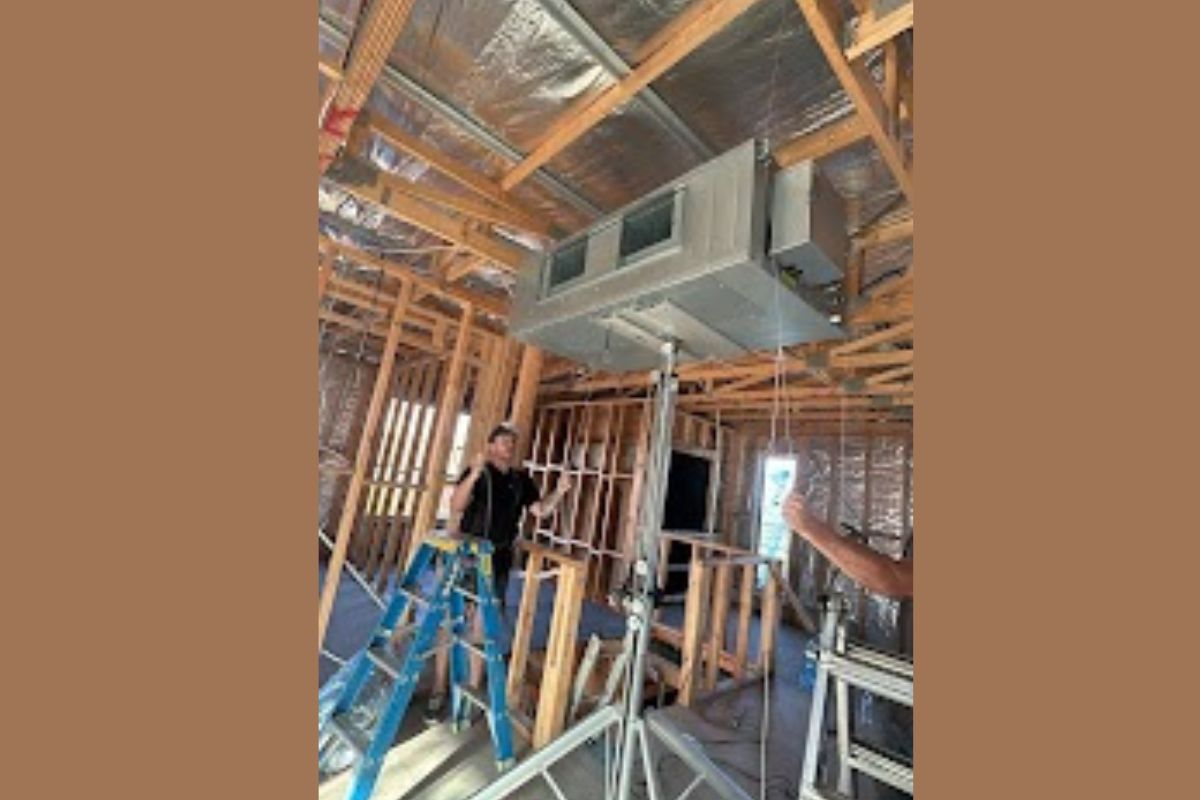
A skilled technician often uncovers the root of the problem: too much strain on a small system. This photo of an HVAC pro hooking up a new unit reminds us that sometimes the fix is technical. In many cases, fixing undersize means recalculating loads or installing a bigger capacity unit so the hardware isn’t crying for help every summer.
5. The System Melts on Heatwave Days
In an age of climate extremes, think about those rare scorching days. On a 35°C afternoon, does your office barely drop below 28°C? When the mercury spikes, a true undersized system simply can’t keep up. Even a well-maintained system eventually hits its limit on record heat. The lesson: a little extra capacity (or better insulation) can keep your business from melting down when summer really hits.
Even in Melbourne, a few hot days a year can be brutal. The system’s cooling capacity is rated for normal seasons, not record-breakers. If your office feels like an oven when the heat sets in, it’s a sign your HVAC isn’t up to the challenge. A bit of extra capacity or better insulation can help your business weather those extreme days.
6. Frequent Short Cooling Cycles (On and Off)
Sometimes an undersized system will start and stop frequently — even though this is usually an oversized symptom. Each short cycle still can’t reach the set temperature. The AC struggles in bursts and never stabilizes comfort. If your unit cycles repeatedly without actually cooling the space, your system is likely undersized.
7. The Air Feels Too Humid or Stuffy
Even if it’s not officially humid outside, a corner of your office might feel sticky. That’s because a properly sized HVAC not only cools but also dehumidifies by running long enough to pull moisture out of the air. If the system is too small, it never hits that efficient run time, so moisture lingers and the air feels clammy.
Conclusion
Getting the size right for your Commercial HVAC isn’t just nitpicking — it’s crucial for comfort and efficiency. If you’ve noticed any of the above issues, it’s time to act. In a commercial building, guesswork can be expensive — invest in a professional load calculation to ensure your HVAC is sized correctly.
Fortunately, most issues from an undersized system have clear fixes. Upgrading to a properly sized unit or adding zoned systems lets everything run smoothly and last longer. Talk to a trusted HVAC professional to check your setup and address any sizing problems. This proactive step can save you money and sweat down the line.
